Ivf Failed When Can I Try Again
Why does IVF fail and what can the fertility clinic do to increase the take a chance for success on a 2d IVF?
- The showtime IVF cycle will often be successful at a high quality plan.
- Unfortunately, many couples will non have successful commencement cycle IVF results and will need to consider a second bicycle.
- And then what should exist next after ane failed IVF cycle?
- Let a week or and then pass in guild to make the difficult adjustment to the devastating news that your cycle did non succeed.
- When you feel gear up, schedule a consultation with your IVF specialist to go over what might have been learned from the failed IVF attempt.
- An of import consideration should be whether to change IVF doctors or switch to a different IVF dispensary at that point.
- IVF programs are not all equal – some give a much higher chance for success than others.
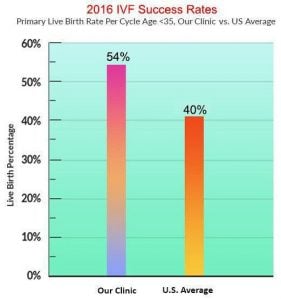
Our 2016 success rates vs. national average
Information from 2016 SART report
See our IVF success rates
Follow links to the CDC and SART reports with success rates for all reputable clinics
Encounter the CDC IVF success rates for any reputable clinic in the U.s.
See SART IVF success rates for all SART member clinics
The first matter that should happen after a failed IVF endeavour is for the IVF specialist physician to review the bicycle advisedly to possibly learn something from the results of the IVF ovarian stimulation process, or from any issues with egg retrieval, egg quality and/or quantity, fertilization results, embryo development, or problems with the embryo transfer process.
Ofttimes in that location will be an issue in ane or more of these areas. The ovarian stimulation protocol and results also as the embryo development issues should exist discussed with the couple. Pictures of the embryos and quality scoring issues, including cell stages, fragmentation and regularity of the cells in day three transfer cases, or blastocyst grading and expansion scoring for day 5 transfer cases – should as well be reviewed and discussed. Then a plan for a second IVF wheel tin be formulated.
Inefficiencies in the IVF process volition not e'er exist issues that are "fixable" – simply they should be studied and discussed with the couple so that they are educated about their state of affairs and their estimated success rates for a second IVF attempt.
Many issues seen in a failed first IVF endeavour can be addressed in order to eliminate or reduce the likelihood of the same issue occurring in a second effort with in vitro fertilization.
What is the reason that IVF fails?
If there is an embryo transfer washed, the reason that IVF fails is considering of embryo implantation failure. All the same, that is not very helpful.
When IVF fails there was implantation failure, but we do not know whether the failure to implant was due to a problem with the embryos or a problem with the uterus. Most fertility specialists believe that in more than 95% of IVF failures it is due to abort of the embryos.
- Embryonic arrest is quite frequently due to chromosomal or other genetic abnormalities in those embryos that made them as well "weak" to continue normal development and sustained implantation.
- Unfortunately, these problems are by and large a "blackness box" at the present time – unless we do preimplantation genetic screeing, PGS, for chromosomal condition on the embryos prior to transfer, we can not know if they are likely to be competent.
Embryo quality issues and IVF implantation or failure potential
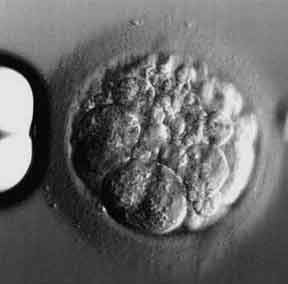
Poor quality 6-jail cell embryo on day 3
Blastocyst transfer is an IVF culture technique that allows us to maintain high IVF pregnancy rates when only transferring 1 or (usually) 2 embryos to the mother. This results in almost no hazard for triplets.
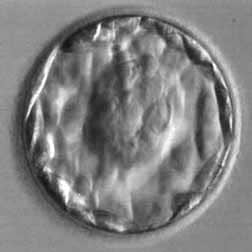
High quality blastocyst embryo on day 5
And then what should you practise?
Meet a Board Certified Reproductive Endocrinology and Infertility specialist such every bit i of our fertility physicians and discuss the bug as they relate to your ain unique situation.
What is the success rate with a second cycle of IVF?
Couples oft ask this very reasonable question. However, there is not a good, short answer. Many couples will have a successful second IVF. The chances for that happening depends on many factors, including:
- Age of the female person partner
- Egg quality and egg quantity
- Sperm quality
- Quality of the IVF ovarian stimulation – dependent on the skills of the physician controlling this procedure
- IVF lab quality
- Egg retrieval skills of the physician and overall efficiency of the egg pickup process
- Embryo transfer skills of your IVF doctor and ultrasound equipment and technician
- Number of eggs retrieved
- The cause of your infertility
- Uterine issues
- Embryo developmental rates, embryo quality, and rates of embryonic arrest during development in the lab
- Genetic and chromosomal competence of the embryos
In order to maximize the chances for a successful second IVF try brand certain that your physician has carefully reviewed the problems in a higher place. You might also consider changing doctors between IVF cycles. Some reproductive endocrinologists (infertility and IVF specialists) are pulled in many unlike directions and are non focused on IVF or on having the best possible IVF lab and dispensary.
Having an outstanding IVF program requires abiding diligence and consistent execution. This is not an easy proffer – particularly in very large IVF clinic – where thousands of couples are pushed through annually in a mass production approach. That approach to IVF often works much better for the clinic than it does for the eggs, the embryos, or the infertile couples.
IVF failed – what side by side?
Summary for a second try with IVF:
- Get an honest estimate from your IVF doctor on your chances for success rates with a second IVF effort
- If there were difficulties with the ovarian stimulation or low numbers of eggs – consider modifications to the drug protocol
- If there were average or good looking embryos for transfer, but none implanted, try IVF a second time at the same or a different IVF dispensary
- If in that location were significant egg and/or embryo quality issues, it is well-nigh likely due to an egg problem or an IVF lab quality control problem. Therefore, consider changing the IVF clinic to a program with higher in vitro fertilization success rates to run across if these bug were due to egg quality – or a trouble with the ovarian stimulation, or a trouble in the IVF lab
- Donor sperm, donor eggs, or donor embryos could exist future considerations, but those are usually further downwardly the road than subsequently i failed IVF wheel
- The uterus tin can be the problem, simply that is rare. Implantation failure is almost ever considering the transferred embryos were also weak to implant and continue normal development. The uterus is almost e'er receptive for embryo implantation.
Overall, IVF success rates are only slightly lower for 2d attempts as compared to offset IVF tries. Couples with the best egg quality are more probable to become pregnant on their offset effort, but this is balanced out to some extent past potentially learning from the beginning failed bicycle and making adjustments to maximize success for the second in vitro fertilization attempt.
The graph below from the US government's 2012 CDC written report shows national average data on IVF success past age and whether information technology is a first IVF attempt – or a second, third or fourth effort later on previous failed cycles.
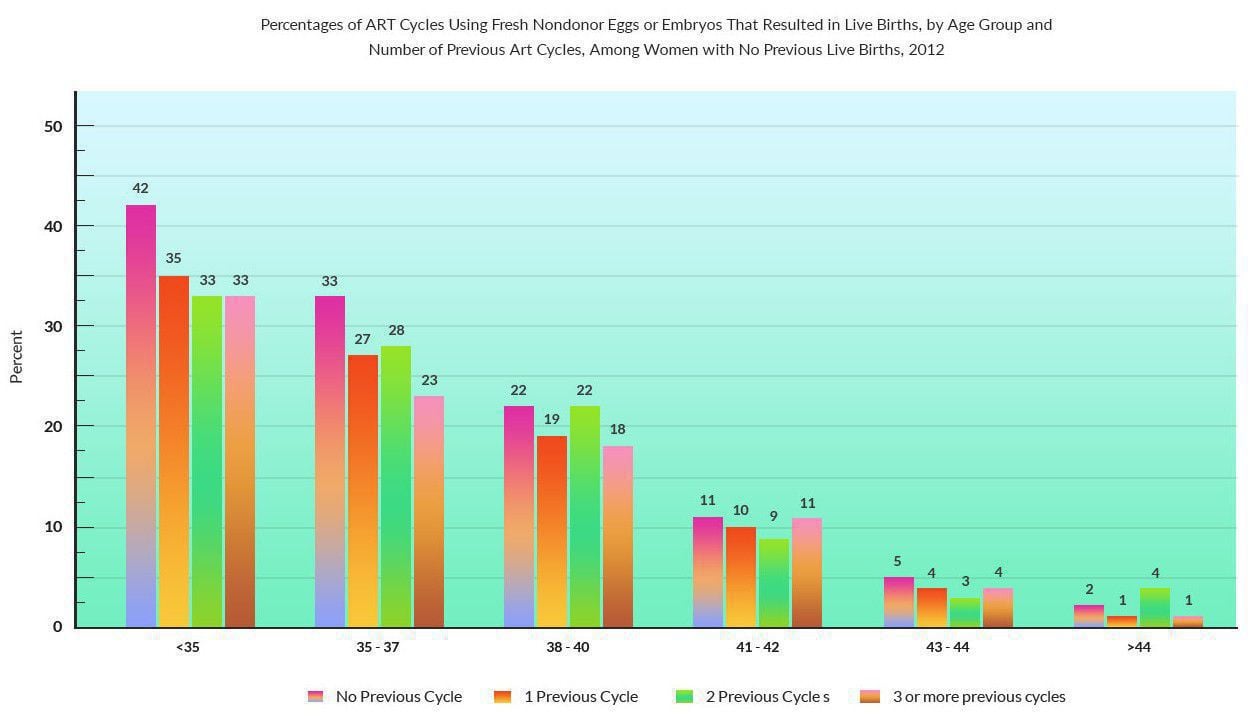
Under age 43, IVF success is somewhat lower if in that location take been IVF failures only no success
Source: https://advancedfertility.com/2020/09/18/ivf-failed-what-to-do-next-after-a-failed-cycle-in-order-to-have-success-with-the-second-ivf-attempt/
0 Response to "Ivf Failed When Can I Try Again"
Post a Comment